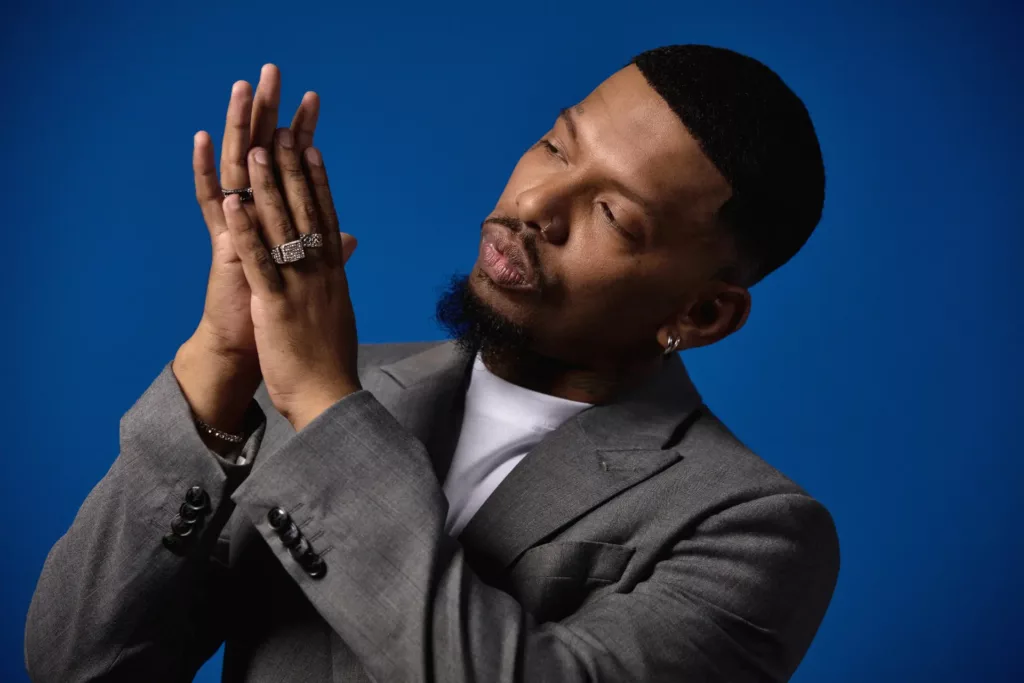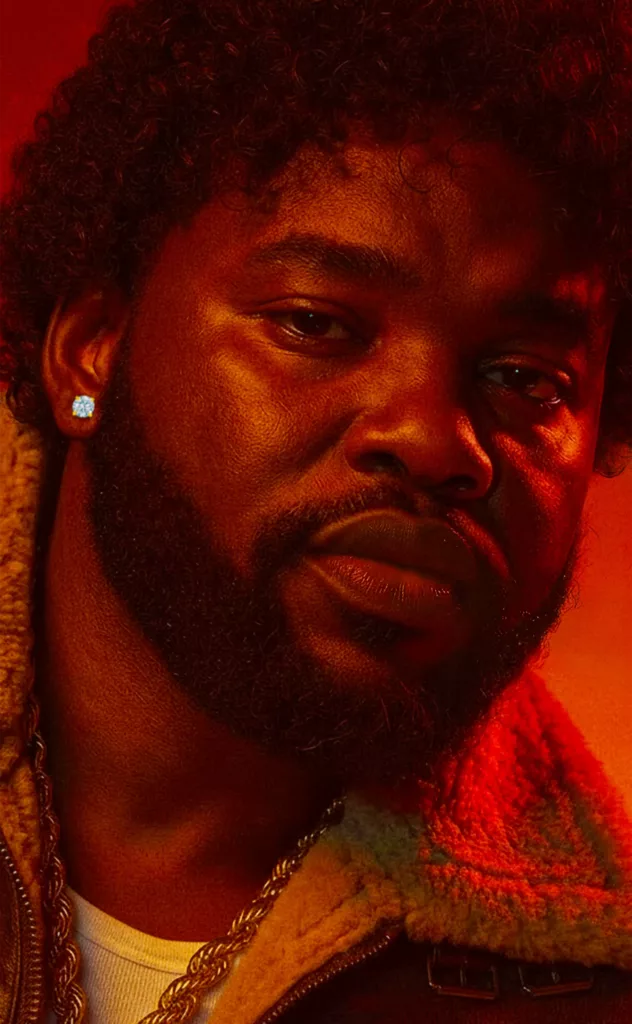

From the pulse of Queens to the dance floors of Johannesburg, DJ Moma has built a career rooted in rhythm, range and cultural connection. A true student of the global soundscape, he’s moved seamlessly from rare grooves and deep house crates to becoming the driving force behind internationally celebrated experiences like Everyday People.
Now, with Jozi Love Affair, Moma channels his six-month immersion in South Africa into a body of work that reflects the country’s explosive dance culture — from Amapiano to Afrohouse and beyond. More than just a visiting curator, he’s approached the scene with intention, collaboration and deep respect, crafting a project that feels both global and distinctly Jozi.
You were raised in Queens. Can you tell me about the music and nightlife scene out there?
Back in the day, the club scene in Queens – and the rest of New York City – was dominated by hip-hop, R&B, old school classics, dancehall and house music classics. Nowadays, the musical range is even more diverse with the addition of Afrobeats, Soca, Reggaeton, Kompa, Jersey Club, Afrohouse and Amapiano. Queens and NYC nightlife feels like a diaspora musical melting pot.
How did you start becoming DJ Moma. Where did the journey begin?
The journey began in 2001 after I started collecting vinyl. I was very interested in rare grooves, deep house, soulful house, broken beat and UK Garage. Once I amassed a couple of crates worth of records, some of my friends in Brooklyn insisted that I play a set at their party in Park Slope, and the rest is history, as they say. My debut set was a success because everyone I knew showed up, so either my set was brilliant or they were biased, or both! But my second set was a disaster because it was a random Saturday night crowd and my super eclectic records were not connecting; it was a total stalemate. So after that night, I committed to always carrying well-rounded crates, so I started collecting hip-hop, R&B, dancehall and old school classics just so I could be prepared for any scenario. That was the genesis of my DJ journey and to this day I pride myself in being able to play to a mainstream
room or an underground dance floor. Obviously, year on year it gets harder to keep up with everything, but I hope I never lose that versatility.
You’re known as the party starter. How did you become entrenched in nightlife culture?
I think I became a part of nightlife culture in NYC through consistency. I held a weekly Monday night party called The Good Spot in lower Manhattan that lasted for four years. I also started a weekly Friday night party in Harlem called Harlem Nights that lasted for five years. I have an ongoing Wednesday night weekly in Manhattan called Dance Dance Dance that just recently celebrated its 11-year anniversary. And globally, I think I was able to get entrenched. In nightlife internationally withmy travelling event series, “Everyday People” which was founded in NYC in 2012 but is currently happening all over the world, including here in South Africa in Johannesburg and Cape Town.
Your interest in the South African culture isn’t about being a vulture but rather about experiencing SA for what it is. What are the differences between the South African dance culture and American dance culture?
The South African dance culture is in the same place that the US dance culture occupied in the 90s. In the 90s, the US created and exported house music to the whole world. That influence helped to create the UK house scene and the SA house scene as well, along with house scenes in countless other countries. Back then, the US was consuming US dance music almost exclusively and probably wasn’t checking for what was happeing elsewhere (why would you when you had the NYC, Detroit and Chicago dance scenes of the 90s?). Post-Covid, I feel as though South Africa occupies that same space: it creates and consumes its own dance music (Amapiano, Afrohouse, 3-step, Gqom, etc.) and exports to the whole world. Locally in SA, the people appear to be consuming almost exclusively South African dance music (except for the old school dance classics). And clearly the rest of the world is receiving this music really well, as you see Amapiano and Afrohouse collectives and event series growing in virtually every major city across the world. So I think the US and SA scenes have a lot of similarities in their evolution, its just that the parallels are drawn 30 to 40 years apart.
You were posted up in Johannesburg for 6 months. Can you describe the experience of your first night out in SA?
I spent 6 months in Jozi between 2019 and 2020, but my first night out in Johannesburg was in August 2017 when I first visited South Africa. Back then, the clubs still played a lot of American hip-hop & R&B, but I was mostly interested in the other sounds being played at the time: South African hip-hop, Gqom (which was huge at the time) and some early days Amapiano. Specifically, this one Amapiano banger that got a lot of play – Oe Batla Kae by De Mogul SA. I remember appreciating how the crowds were vibing with the DJs through all those sounds, but I mostly remember feeling like Oe Batla Kae was such a superior groove. It really caught my ear and I started deep diving into the Amapiano sounds and I discovered MFR Souls as a result. To this day, I consider De Mogul SA and MFR Souls as some of my favorite producers, alongside Kabza, De Mthuda, Kelvin Momo & co.
Out of all of the different sound like 3 step, amapiano and house, which sound were you drawn to the most and why?
This is like asking someone to pick their favorite child! But I would say that Amapiano stands out because of its such a unique genre. I think it did for South African culture the same thing that hip-hop did for Black American culture. It exported it all over the world and it articulates itself in more ways than just the music: it came with fashion, slang, dance moves, visuals, etc. It came packaged with many dimensions of the culture, so I think, just for that, Amapiano has a special place in my heart. But of course, as time moves on and people’s appetite for music evolves, things can change. While you can say that Amapiano had massive years in 2023 and 2024, you could also say that 2025 was – internationally – a bigger year for 3-step and Afrohouse. So sensibilities do change.
Collaboration played a huge role in Jozi Love Affair. Who was the first artist that you tapped in with when you landed?
To be honest, I didn’t exactly seek to tap in with anyone when I first landed in Jozi. I had set up a home studio in my hotel suite for me to (a) practice and continue a jazz piano course I had started in NYC and (b) create a few tracks alongside my engineer Xdizzle. However, after posting a few stories showing the home studio on IG, Kai and Zeus from Rap Academy (whom I know well from doing events with Uncle Waffles in the US) hit me up and said, “We’re coming through with Ice Beats slide, let’s cook!“ Obviously, I am a huge fan of Ice Beats, so we set it up and had a dope session. That first session, we actually made the beat for Potential, which ended up being on my album. I think I posted some snippets of that session to my IG story and when K-Zaka saw it, he hit me up like “Yo, I’m gonna come through with TNK Muic, let’s cook!” And so on and so forth. It was a very organic process and one thing kept leading to another and ultimately we had sessions in the hotel suite with XDuppy, Blaqnick and MasterBlaq, MustBeDubz, Jillz, Manu Worldstar, Starr Healer, Nicole Elocin, Nasaa, Luigi Anywhere and so many more. The whole process was a vibe.
South African’s are known as a lively people and I’m sure that you experienced that in the creation of Jozi Love Affair. Can you share a bit about your favourite studio session?
My favorite and most collaborative studio session was probably the one for Wololo. I woke up early and started a drum track. Then K-Zaka came through with Born Kxng. K-Zaka beefed up the drums and Born Kxng laid down some chords. Then MustBeDubz came through and added the log drums and additional atmospheric elements. Then D’Patch and Phantom Steeze added their verses. At some point, we all huddled around the mic and sang the background vocals like a choir. And by the end of the session, it was an all-out dance party in the suite. Undeniable good times and good vibes and it translated to the record, which has been received very well so far.
Jozi Love Affair borrows elements from different sounds. Was that intentional or was it something that came about in the creation of Jozi Love Affair?
Not exactly intentional. I make music the same way I DJ: I try to infuse elements from all my inspirations, but I try to do it in such a way that the music feels accessible, progressive and fresh at the same time. The accessible nature can be found in the warm chords, the jazzy progressions, the soulful or catchy Afrobeat vocals. The more progressive elements come from the sophisticated nature of Amapiano, 3-step and Afrohouse production. And then the freshness comes from blending the whole thing together tastefully. So the overall mixture isn’t so much international as it is integral to who I am as a DJ, produce, musician and as a person.
What sort of spaces do you see people enjoying Jozi Love Affair? Is it a vibe for the heavy party goers or is it more like a chilled sundowner vibe?
think the album flows smoothly and would make a good soundtrack for a sundowner or a braai or a house party. But there are definitely tracks that go off in the club too, such as Party Starter, Thiba, Wololo and Amamillion.
After listening to Jozi Love Affair, what is the one thing you want people to take away about DJ Moma?
That I love music deeply and that I am grateful for the contributions that South Africans have made to global dance music. Those contributions have not only reinforced South Africa’s standing in dance cultur but they also uplift Africa as a whole and lend credibility to cultural contributionts from all over the continent. And I am here for it!
Will you be looking to come back to SA or was this visit part of a global movement you are pushing?
I definitely plan on coming back to SA. My current routine consists in touring from May through New Year’s but once that’s done, I often spend 3 months in Sout Africa from February through April. I use this time period to recharge, refocus, get reinspired, cook up some new music before the hecticness of tour life picks up again.
In closing, if you had to describe the Jozi nightlife scene in one sentence, what would it be?
Jozi nightlife is a journey through sound that is unmatched because every DJ is a producer or music maker of sorts and every partygoer has the musical IQ of a veteran producer: this type of combination is very rare and, at its best, it creates the highest of highs on the dance floor.





![CTT Beats, Flash Ikumkani, Hannah V – UNDITHWELE [ Official Video]](https://dalakreative.com/wp-content/uploads/2024/04/126e2320-6774-67b8-c0d0-6e9f02af4d58.jpg)