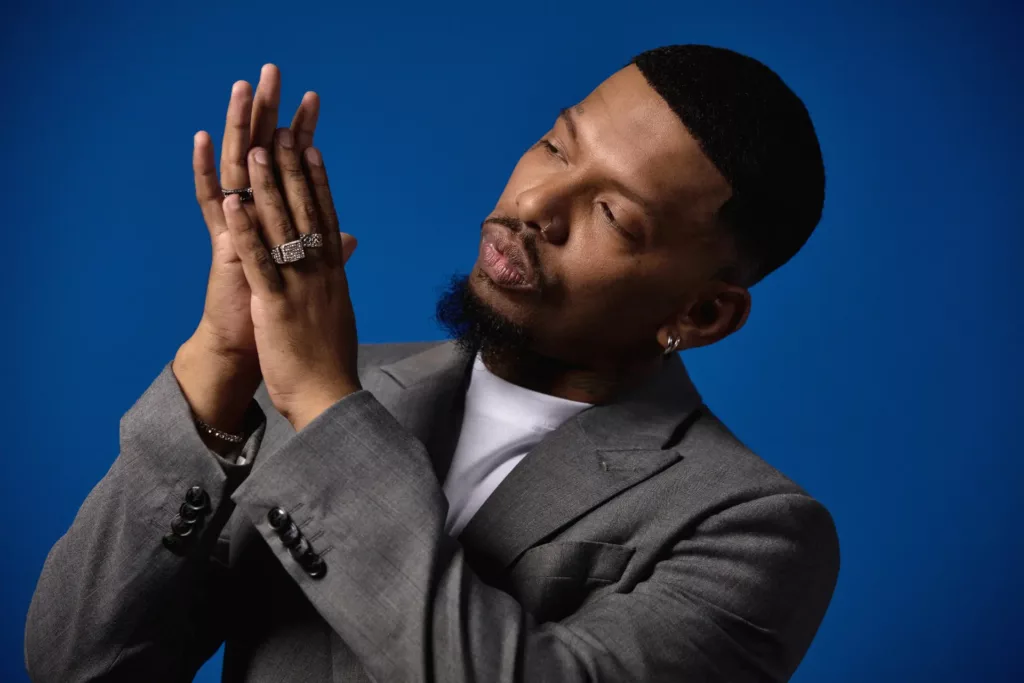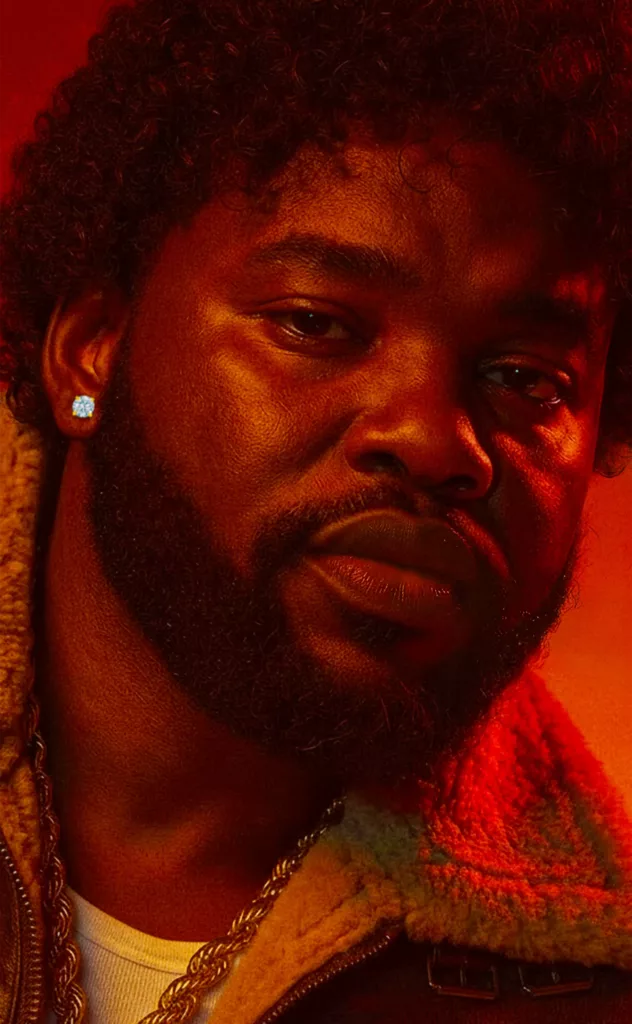
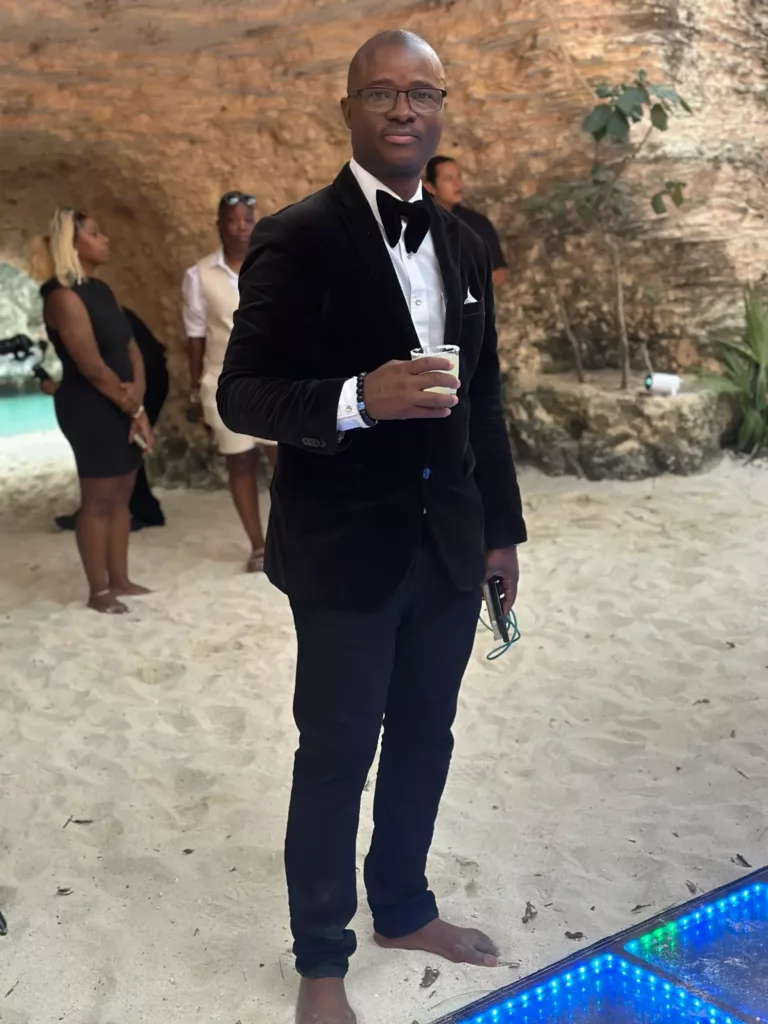
From witnessing the birth of hip-hop in 1980s New York to documenting one of the most ambitious live collaborations in rap history, Gerald K. Barclay, professionally known as Gee-Bee — has always stood at the intersection of culture and cinema. The Liberian-born, award-winning director has shot hundreds of iconic music videos and built a decades-long creative relationship with the legendary Wu-Tang Clan. With A Wu-Tang Experience, he captures the group’s historic Red Rocks performance alongside a 60-piece orchestra, turning what could have been just a concert film into a layered exploration of legacy, evolution and artistic risk. Having previously chronicled the group’s rise, Gee-Bee now documents their reinvention, proving once again that hip-hop’s story is far from finished. Bona, dula fase, and enjoy this conversation!
As a Liberian-born filmmaker, how has your cultural background influenced the way you approach storytelling in hip-hop and documentary film?
GB: I moved to New York from Africa in 1983 just as hip-hop was taking shape, which allowed me to witness a powerful cultural movement firsthand. Growing up in the same neighborhood as many Wu-Tang Clan members gave me a front-row seat to their evolution. Watching Method Man, Rae, Deck and Cappadonna rise was magical. I share those experiences in my book Shooting The Clan: Eyewitness to the Rise of the Wu-Tang Clan.
You’ve directed hundreds of music videos for legendary artists like Wu-Tang Clan, Snoop Dogg and Big Pun — how did those experiences prepare you to helm a project as layered as A Wu-Tang Experience?
GB: My music video background helped me implement dynamic camera and editing techniques to keep the film visually engaging. Interestingly, I directed more videos for No Limit than Wu-Tang. That experience sharpened my ability to move fast and think creatively under pressure.
What initially drew you to documenting the Wu-Tang Clan’s performance at Red Rocks with the Colorado Symphony Orchestra?
GB: Divine called to tell me that RZA wanted me to assemble a crew to film the concert, which included a live scoring of a film with a 60-piece orchestra. Once I arrived at Red Rocks, it was clear this was bigger than expected. I decided to capture additional elements to tell a compelling story about RZA’s genius and the group’s creativity. This was also during the pandemic, which made everything even more uncertain and challenging.
The film blends live performance, interviews and historical context. How did you structure the narrative to balance spectacle with storytelling?
GB: I focused on capturing the performance in immersive ways — using cable cams, cranes, a drone, 360 cameras and about 13 additional cameras. I then built tension into the narrative by emphasizing that everything could fall apart if one element failed. That kept viewers invested in whether RZA could pull it off.
A Wu-Tang Experience explores whether hip-hop has earned legitimacy alongside traditionally prestigious genres. What was your perspective going into the project?
GB: Our central question was whether hip-hop could merge seamlessly with classical music. My job was to capture the evidence that proved it could.
Capturing a 60-piece orchestra alongside one of hip-hop’s most iconic groups is no small task. What were the biggest technical and creative challenges?
GB: Directing 17 cameras simultaneously — half of which I couldn’t monitor — was the biggest challenge. I held a detailed crew meeting to assign specific shot compositions. Before the show, I reminded them they were chosen because they were skilled and trusted. The result was incredible concert footage.
Red Rocks Amphitheatre is visually iconic. How did you use the landscape to enhance the emotional weight of the performance?
GB: I directed cable cam operators to move from tight close-ups to extreme wide shots revealing the city skyline and mountains. Those transitions created spectacular, cinematic moments.
The live scoring of The 36th Chamber of Shaolin added a cinematic dimension. How did you translate that synergy effectively?
GB: Seeing orchestra members in black Wu-Tang hoodies, genuinely enjoying playing classic hip-hop, was powerful. The universal magic of music took over, and it was beautiful to capture.
Having previously worked on Wu: The Story of the Wu-Tang Clan, how did this project differ in tone and intention?
GB: The Story of the Wu-Tang Clan focused on their rise and early days, ending with ODB’s passing. This new project explores whether the group could continue evolving after losing such a key member.
With figures like RZA, Method Man and Young Dirty Bastard involved, how did you capture individual personalities within a collective legacy?
GB: My long-term connection gave me access to key members. I focused on specific voices to deepen the narrative. Young Dirty Bastard was especially important in continuing his father’s legacy.
As a cinematographer and editor as well as director, how hands-on were you in shaping the film’s rhythm?
GB: After filming, RZA and I reviewed the footage together and shaped the narrative. We went through about 25 edits to fine-tune the pacing and structure.
The concert was described as “capturing lightning in a bottle.” How do you preserve that energy in a documentary?
GB: The complexity of the concert made it nearly impossible to replicate. With so many moving parts, it truly was lightning in a bottle — and that uniqueness gives it power.
Your filmography spans documentaries and narrative films. How does your approach shift between them?
GB: I treat each project individually by immersing myself in the topic. Whether documentary or narrative, I focus on themes that are personally meaningful to me.
Having worked closely with Wu-Tang for years, how has your creative relationship evolved?
GB: We were the black sheep of NYC, so I understood them. When I directed the “Method Man” video, I introduced cinematic elements like slow motion and sound effects — techniques I still use today.
Hip-hop and classical music are often viewed as worlds apart. What did this collaboration reveal?
GB: I saw how much RZA has evolved as a producer. Music is universal, and many negative stereotypes come from class and racial biases.
From a production standpoint, what was the most complex moment to capture?
GB: The cable cam sequences were intense. At one point, the cable snapped, and we lost our main camera for about 15 minutes while it was repaired.
What do you hope younger filmmakers take away from your journey?
GB: Filmmaking has evolved rapidly. There are more tools and possibilities now, including AI, which is a game changer if used properly. But the key is always the story — focus on that, and you will win.
After A Wu-Tang Experience, what stories are you most passionate about telling next?
GB: I’m interested in exploring vertical dramas and revisiting older material that fits that format. I’ve learned to embrace change and evolve with the industry.




![CTT Beats, Flash Ikumkani, Hannah V – UNDITHWELE [ Official Video]](https://dalakreative.com/wp-content/uploads/2024/04/126e2320-6774-67b8-c0d0-6e9f02af4d58.jpg)